
Source: S.M. Mazza (UCSC)
From simulation to prototypes, from lab tests to test beam campaigns, we are expanding our expertise.
We aim to develop new detector technologies for particle physics experiments exploting both high precision space and time information - which will resolve the collision events overlay simultaneously in space and time.
We focus on the Low-Gain-Avalanche-Diode (LGAD) design - the key technology to build the new timing detectors for ATLAS and CMS experiments at HL-LHC. The current LGAD design can provide tens of picosecond precise timing measurement, however, it faces severe challenge to provide micro-meter precise spatial measurement - thus becoming the 4D tracking sensor technology.
In collaboration with prof. dr. B.A. Schumm (University of California, Santa Cruz), we work on design, simulation, and future on lab characterisation of the new Deep Junction LGAD (DJ-LGAD) technology (EU Patent, EP 4052304, UCSC).
Our work is part of the ECFA DRD3 collaboration and the Dutch FASTER consortium.
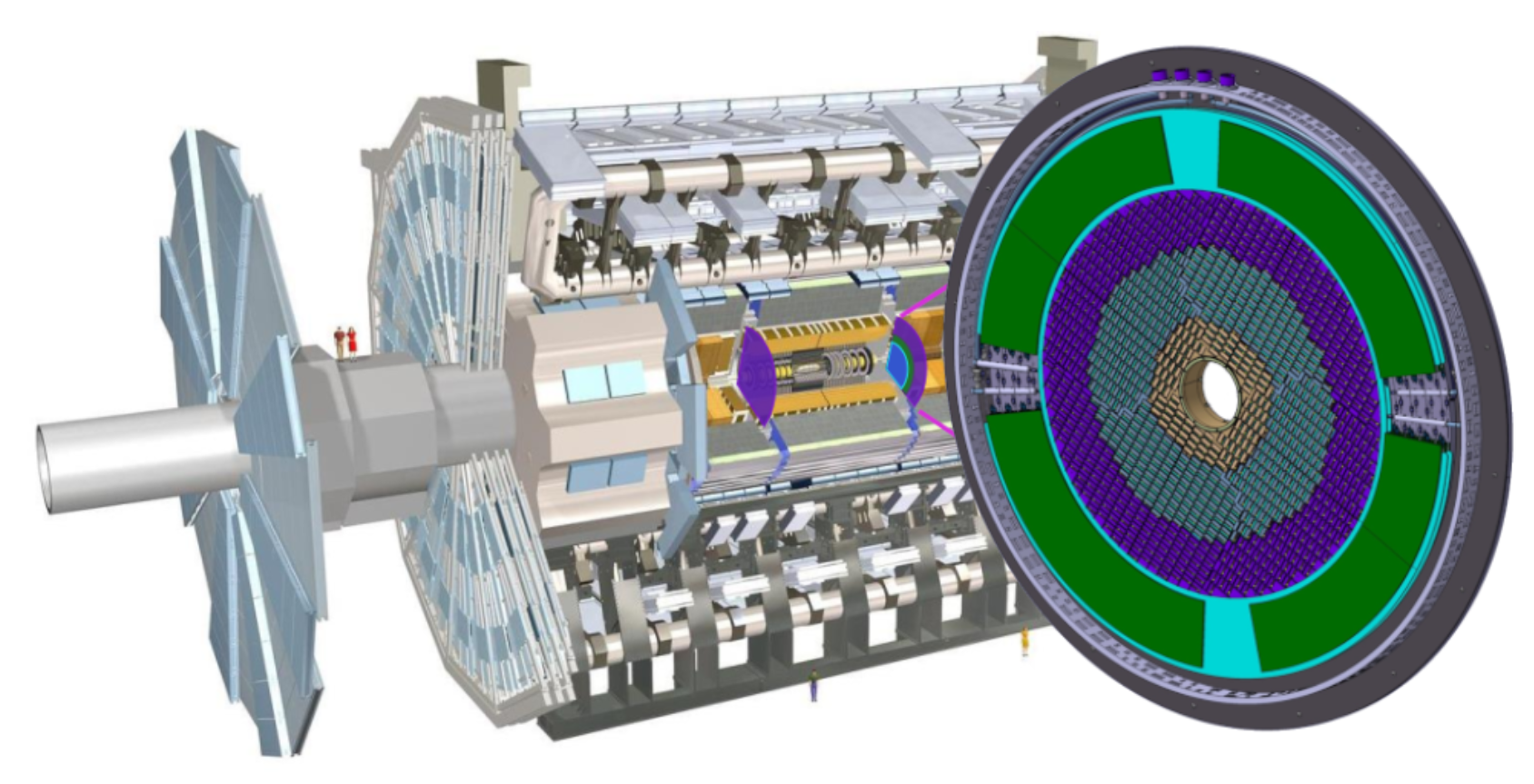

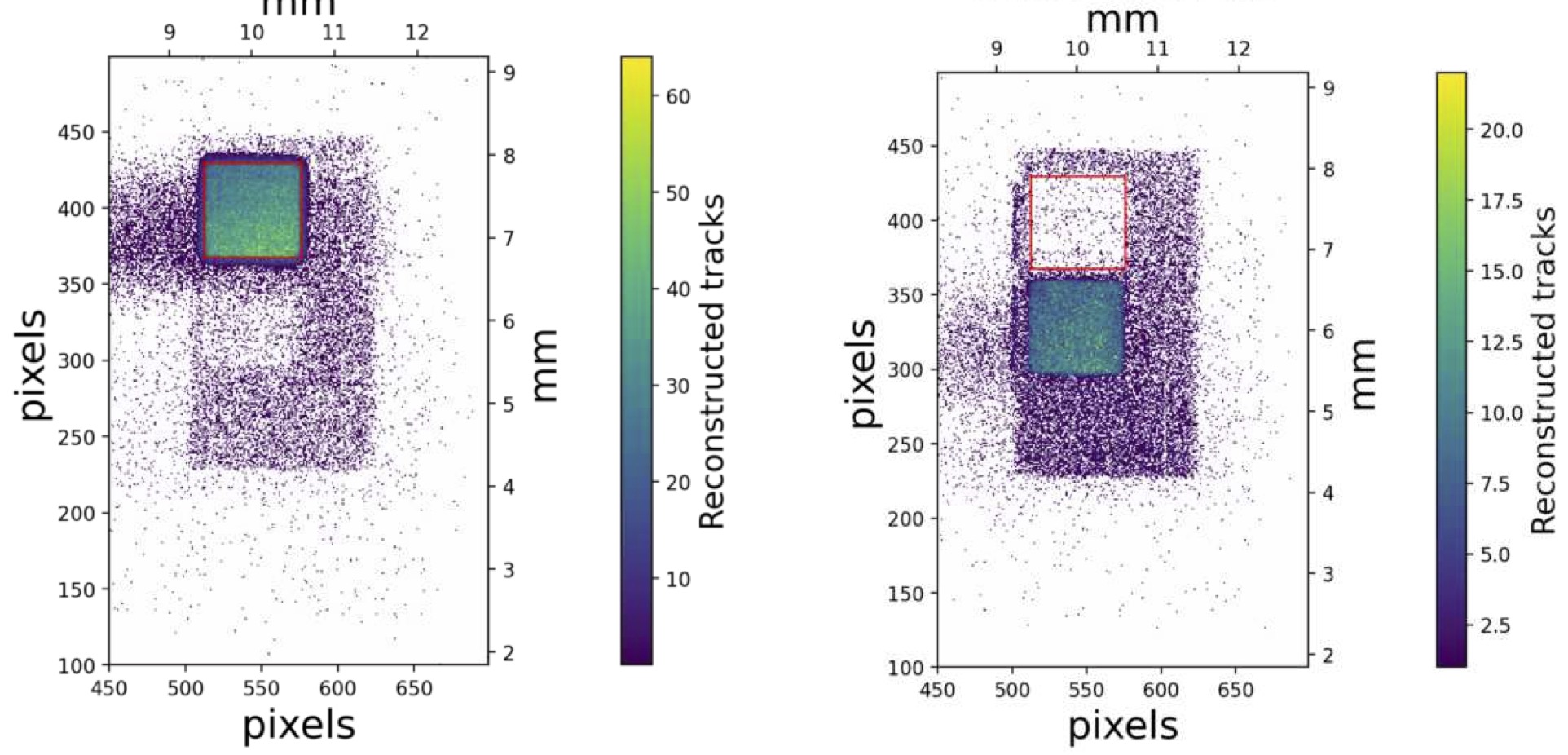
We carry out full-stack sensor characterisation: from electronic property measurement on a probe station, to the MIP measurement in the lab with a radioactive source, to test beam campaigns and its data analysis.
In Nikhef, we are equipped with a half-automatic probe station for IV/CV measurements, Single Photon Analyzer (SPA) to examine sensors using Transient Current Technique (TCT) and a Two Photon Analyzer (TPA) for a 3D scanning of sensors.
Locally in Nijmegen, our lab is equipped with a table-top manual probe station for IV/CV measurements, as well as a radioactive source with a high-end (high sampling rate and high frequency) oscilloscope for MIP measurements.